Why understory?
Understory Arts Altadena is named for the layer of life that grows beneath the canopy; sheltered, emergent, and essential to the health of the whole ecosystem.
The project is rooted in Altadena. Its founder was raised here, in a family deeply committed to creating space for the arts to thrive - especially work born from the extraordinary diversity of cultures, identities, histories, and ways of thinking that define Altadena and its surrounding communities. For decades, this place has been a quiet incubator: artists, thinkers, musicians, writers, scientists, and organizers shaping culture in living rooms, backyards, classrooms, and informal gathering spaces. The arts here were never ornamental; they were connective tissue. And some of the most vital work happened where art met science; where ecological knowledge met creative practice, where material experimentation met storytelling, where curiosity about the natural world became poetry.
In forest ecology, the understory is the layer of growth that thrives beneath the tallest trees - ferns, seedlings, shade-tolerant species, and the organisms that cycle nutrients back into the soil. It is the most biodiverse zone of the forest, and the most protected. After disturbance, the understory is where regeneration begins: seedlings take hold, root networks reactivate, and the conditions for long-term recovery are quietly established. Without a healthy understory, a forest cannot renew itself.
This is the guiding metaphor of Understory Arts.
The understory represents what grows in protected conditions: creative practice nurtured away from market pressure, artistic relationships that deepen without extraction, and the slow accumulation of cultural wealth that happens when people have space, time, and care. It is where imagination takes root, and where the most unexpected, innovative work emerges from the meeting of different ways of knowing.
Understory Arts is not a replacement for what was lost, nor an attempt to “restore” the past. It is a regenerative space designed to support the next phase of Altadena’s cultural life: one that honors history while making room for emergence. Like ecological succession, the project prioritizes early, low-pressure conditions: small-scale fellowships, intimate gatherings, shared land stewardship, and process-centered artistic work. These early stages create the soil from which more complex, interconnected cultural systems can grow.
At a time when climate change is intensifying both the frequency and severity of fires - making recovery harder and more uncertain - Understory Arts takes a deliberate stance: regeneration must be nurtured. It does not happen automatically. It requires protected space, patience, care, and attention to scale.
By centering artist wellness, land-based learning, and community-rooted creativity, Understory Arts seeks to be one such protected space — supporting the slow, necessary work of cultural regrowth in Altadena and beyond.
The Moment
In January 2025, the Eaton Fire destroyed or damaged thousands of structures across Altadena, scattering longtime residents, scorching soil, and breaking patterns of neighborhood life that had taken generations to weave. Recovery here is not a single project; it is a decade-long negotiation between insurance, infrastructure, ecology, memory, and the will of a community to stay.
The work that holds a neighborhood together at the scale of front porches and back gardens is being led, often invisibly, by neighbors themselves. This is the layer in which Understory operates, and three conditions make this the moment for an organization shaped like this one.
The soil is asking questions only patient, place-based practice can answer.
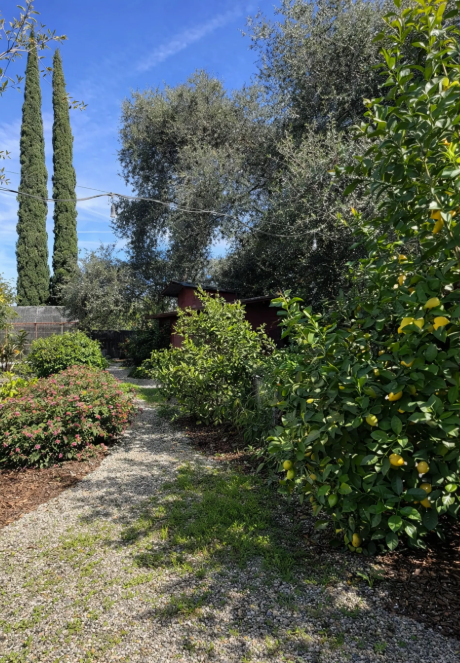
Whether the soil clears for cultivation or pivots to native-habitat restoration, the property models a decision-making process (i.e. testing, listening, deciding, planting) that other Altadena lots will need to make in their own time. A working example, held by neighbors and documented openly, is more useful than a guidebook.
Cultural infrastructure is thin in the recovery zone.
Many of Altadena’s small cultural anchors such as, home studios, informal galleries, artist potlucks, porch sessions, were displaced or destabilized by the fire. The large institutions will rebuild on their own timelines. The small ones rebuild only when someone, somewhere, chooses to host again. Understory is that choice for one property.
Civic imagination is a recovery practice, not a luxury.
Communities that survive disaster do so partly by maintaining the capacity to imagine themselves continuing. Storytelling, foresight, and creative gathering are not ornaments on the side of recovery; they are part of how a place stays a place. A neighborhood that loses its ability to imagine its own future loses itself even where the houses are rebuilt.